
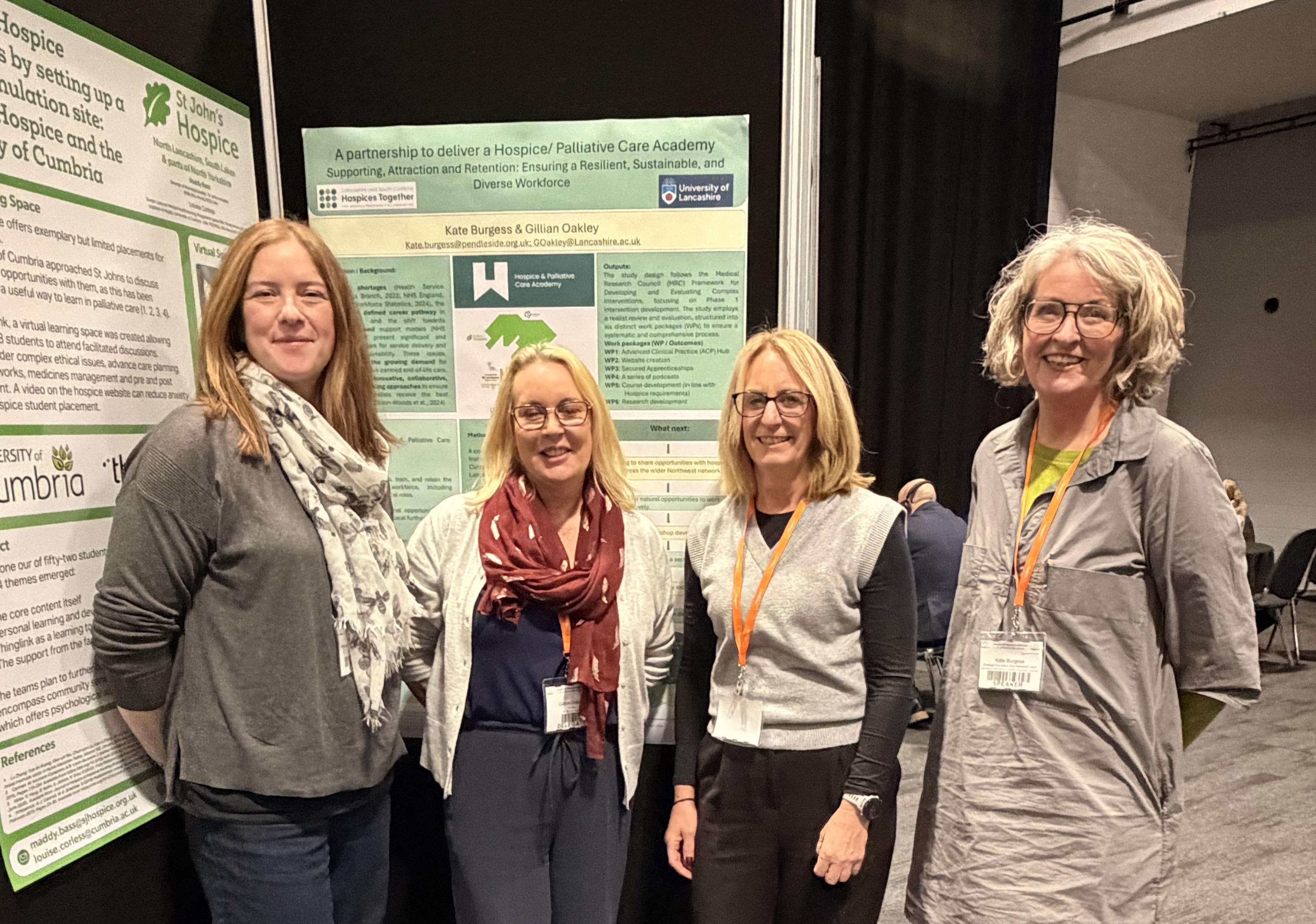
The UK’s first academy for hospice and palliative care workers has been established in the North West.
Born from the Lancashire and South Cumbria Hospices Together (LSCHT) partnership, the Hospice and Palliative Care Academy brings together the Universities of Lancashire and Cumbria with 10 regional hospices* to create a central hub for people who want to explore learning and career opportunities across palliative and end-of-life care.
The Academy aims to develop a future-ready workforce capable of meeting the current and emerging needs of hospice and palliative care. Hospices in Lancashire and Cumbria provided palliative and end of life care to over 15,000 people in 2024-25 and employs 1,300 clinical and non-clinical staff. Demand for hospice and palliative care grows nationally year on year, adding to the challenges of workforce recruitment.
Workforce shortages and the absence of defined career pathways in hospice care present ongoing challenges to attract and retain staff and this is something we’re tackling head on through the Academy.– Senior Lecturer in Palliative Care at the University of Lancashire Gillian Oakley
Through the University of Lancashire and University of Cumbria, the Academy aims to offer a mix of clinical and non-clinical work ready programmes and qualifications, from palliative and medicines courses to leadership, event management and fundraising.
All are designed to make the most of the hospices’ own resources, continuing professional development (CPD) building blocks and apprenticeship levy funding, with further course, workshops, and learning opportunities in development, based upon the unique needs of the hospices. In addition, the Academy will support and promote research to inform community best practice, drive innovation, and contribute to the evidence base for hospice and palliative care.
Current courses use a blend of online and in-person learning (depending on the individual programme), drawing on the academic strengths of the universities and the hands-on experience within hospices. This growing and flexible approach will make hospice-based education accessible across the country.
We’re building a shared future where people can learn, develop and stay in hospice care.– LSCHT Strategic Education and Research Lead Kate Burgess
Senior Lecturer in Palliative Care Gillian Oakley is the University of Lancashire’s lead on the initiative. She said: “Workforce shortages and the absence of defined career pathways in hospice care present ongoing challenges to attract and retain staff and this is something we’re tackling head on through the Academy.
“We’re establishing educational pathways from Level 3 to Level 8, supported by local Further Education (FE) colleges and a ‘working academy’ model that ensures the training delivered meets the skills needed by the palliative care sector.”
The LSCHT collaborative was established in 2023, uniting ten regional hospices to address shared priorities in education, research, and care quality. Partnering first with the University of Lancashire and then the University of Cumbria, the Hospice and Palliative Care Academy is a strategic initiative aimed at strengthening workforce capability across clinical and non-clinical roles.
LSCHT Strategic Education and Research Lead Kate Burgess said: “This is about creating opportunities for our staff, our students and our hospices. We’re building a shared future where people can learn, develop and stay in hospice care. We’ve identified key areas for development, including maximising the use of the apprenticeship levy, tailored educational programmes and opportunities to educate the broader health and social care workforce in palliative and end of life care.”
The Academy is a real example of partnership in action where hospices and universities working side by side to build the workforce of the future.– Helen McVey, Chief Executive of Pendleside Hospice and Chair of LSCHT
Helen McVey, Chief Executive of Pendleside Hospice and Chair of LSCHT, added: “This initiative represents a forward-thinking response to sector-wide challenges, aiming to build a resilient, skilled workforce and ensure sustainable, high-quality palliative care for patients and families across the region.
“The Academy is a real example of partnership in action where hospices and universities working side by side to build the workforce of the future.”
Claire Aindow, the University of Cumbria’s Pro Vice Chancellor for Growth and Development, said: “We are delighted to bring our experience and expertise in apprenticeships and Continuing Professional Development to this innovative and values driven development.
[The Academy] is an innovative, tried-and-tested model that enables shared learning across regions and sets a standard for excellence in meeting the needs of patients and families now and in the future.– Anita Hayes, Clinical Quality Lead at Hospice UK
“Aligning closely with our mission to serve the workforce needs of the region, we look forward to working with Hospices Together and the University of Lancashire to provide excellence in palliative care education and training.”
Hospice UK is supporting the Hospice and Palliative Care Academy model and invited Kate Burgess to share the Academy’s vision with the audience at its National Conference in Liverpool.
Anita Hayes, Clinical Quality Lead at Hospice UK, said: “This Academy is an important step in future-proofing our workforce. It offers tailored opportunities for individual career development and aligns with the new NHS England Career pathway, core capabilities and education framework for palliative and end of life.
“It is an innovative, tried-and-tested model that enables shared learning across regions and sets a standard for excellence in meeting the needs of patients and families now and in the future. It is also a powerful example of partnership, collaboration and system leadership for the benefit of the population it serves.”
Anyone interested in learning more about the Hospice and Palliative Care Academy can visit the website.
* The ten hospices that are part of the Lancashire and South Cumbria Hospices Together (LSCT) partnership are:
St John’s Hospice (Lancaster & South Lakes)
St Mary’s Hospice (South Lakes)
Pendleside Hospice (Burnley & Pendle)
Trinity Hospice (Blackpool & Fylde Coast)
Brian House Children's Hospice (Blackpool)
Derian House Children’s Hospice (Chorley/NW region)
Queenscourt Hospice (West Lancashire, Southport and Formby)
St Catherine’s Hospice (Preston, South Ribble & Chorley)
Rossendale Hospice (Rossendale)
East Lancashire Hospice (Blackburn, Hyndburn & Ribble Valley)